Breaking the rules, keeping the soul: Paul Leuschke on architecture that matters
Written by
21 July 2026
•
5 min read


Architecture practices rarely arrive fully formed. Most are the product of accumulated experience, shifting markets and the persistence of people who enjoy the work enough to stay in it for decades. Leuschke Kahn Architects is exactly that, beginning when Paul Leuschke entered the profession at a time when the role of architects was still relatively clear-cut.
Leuschke began his career as a partner at a firm called Avery & Leuschke, one of a loose group of practices he remembers with some amusement.
“We were the bad boys of the architectural world,” he says. “There were four or five companies who pushed things a bit and worked differently.”
For a young architect there were typically two options. One was to start small and design alterations for friends and family. The other was to join a large practice and work your way up through the system. Leuschke chose a third route. His career unfolded just as the modern property developer began to reshape the economics of building.
“Before developers arrived, most buildings were owner-occupied,” he explains. “A client would commission a building for themselves and their business.”
The developer model changed that dynamic. Instead of designing for a single owner, architects were suddenly working for clients whose focus was maximising a site’s potential and creating a marketable asset.
“The developer just wanted you to maximise the site and tenant it so they could sell the building as a going concern,” he says.
He soon moved into designing industrial buildings and housing, which became the bread and butter of the practice before it later expanded into small commercial projects and larger developments. Like many in the profession, however, his path was also shaped by economic cycles.
The 1987 share market crash forced a moment of reassessment. Leuschke pivoted towards commercial interiors, designing workspaces for law firms, insurance companies and accounting practices in central city towers.
What emerged from that period was an approach that challenged the conventions of office design at the time.
“We started putting the partners’ offices in walls of glass,” he says. “The idea was that the light could travel through the whole floor so the people working in the middle could see daylight and be aware of the weather.”
The arrangement was simple but effective. Secretaries and support staff were no longer relegated to dark interior spaces, allowing offices to adapt to changing workplace structures. It turned out to be influential.
“I did not realise at the time why people kept coming to us for interiors,” he says. “Later they told me we had changed how their offices worked.”
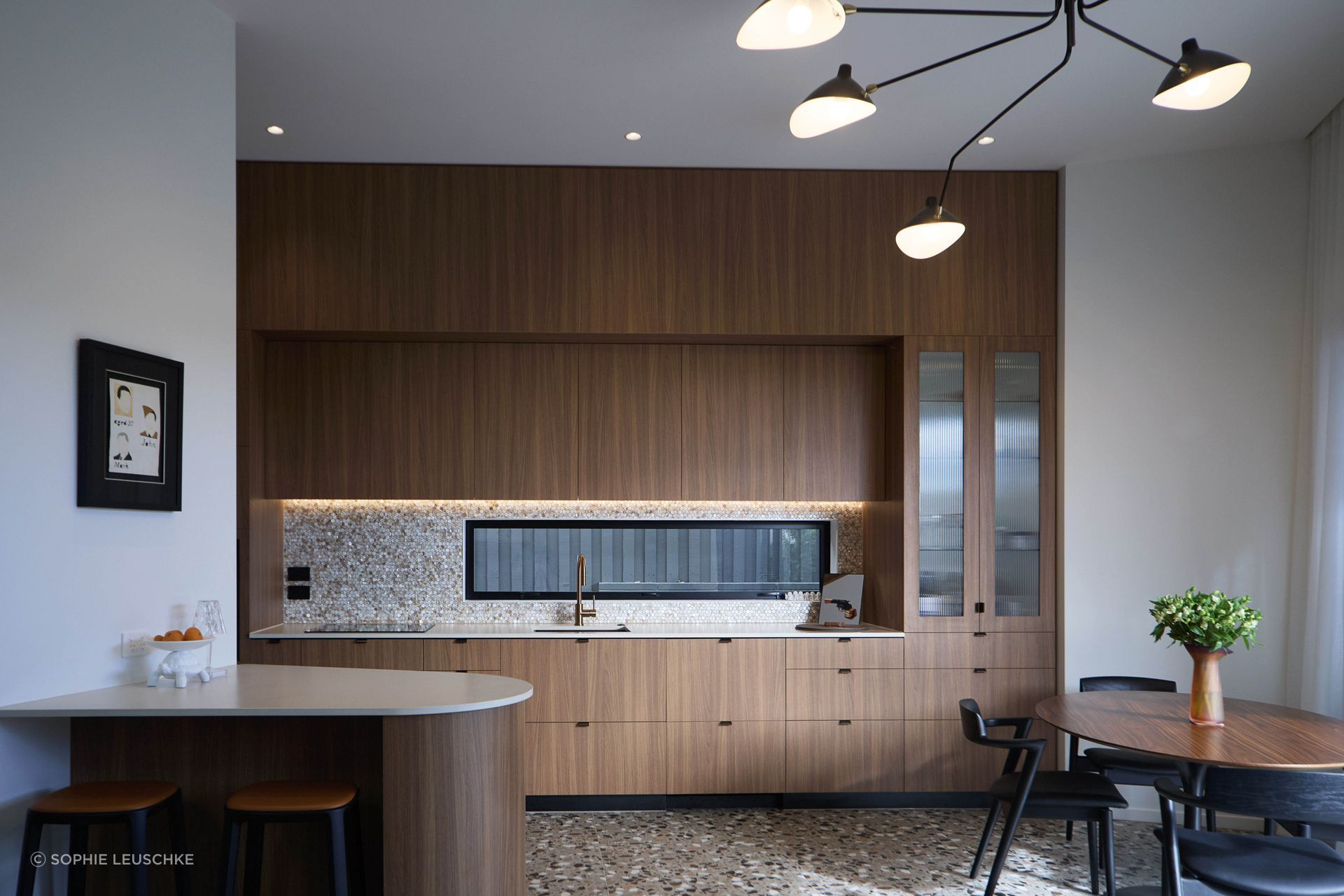
The practice eventually morphed into Leuschke Group, with Leuschke later leaving to form the practice called Leuschke Kahn.
Today, the studio remains deliberately compact, allowing Leuschke to maintain a direct relationship with clients and projects. Much of the recent work has focused on housing, including high-quality homes and alterations across Auckland’s established suburbs.
This more personal scale of work suits the practice’s philosophy. Rather than chasing architectural awards or stylistic recognition, Leuschke’s approach centres firmly on the client.
“We have always worked for the client rather than for awards,” he says. “Our job is to give them what they didn’t know they wanted or what they could have.”
That philosophy often begins with a process of discovery rather than immediate design.
“Most people come to me and tell me the solution,” Leuschke says. “Our job is to find out what the real problem is.”
Sometimes the smallest insights can reshape an entire project. In one case, a beach house design evolved around a client’s desire for a quiet afternoon nap away from guests. In another, a doctor wanted a swimming pool simply so he could reconnect with his children after long shifts at the hospital.
These moments reveal something about the way Leuschke sees architecture. Buildings are not abstract objects or artistic statements, they are frameworks for everyday life and special family occasions.
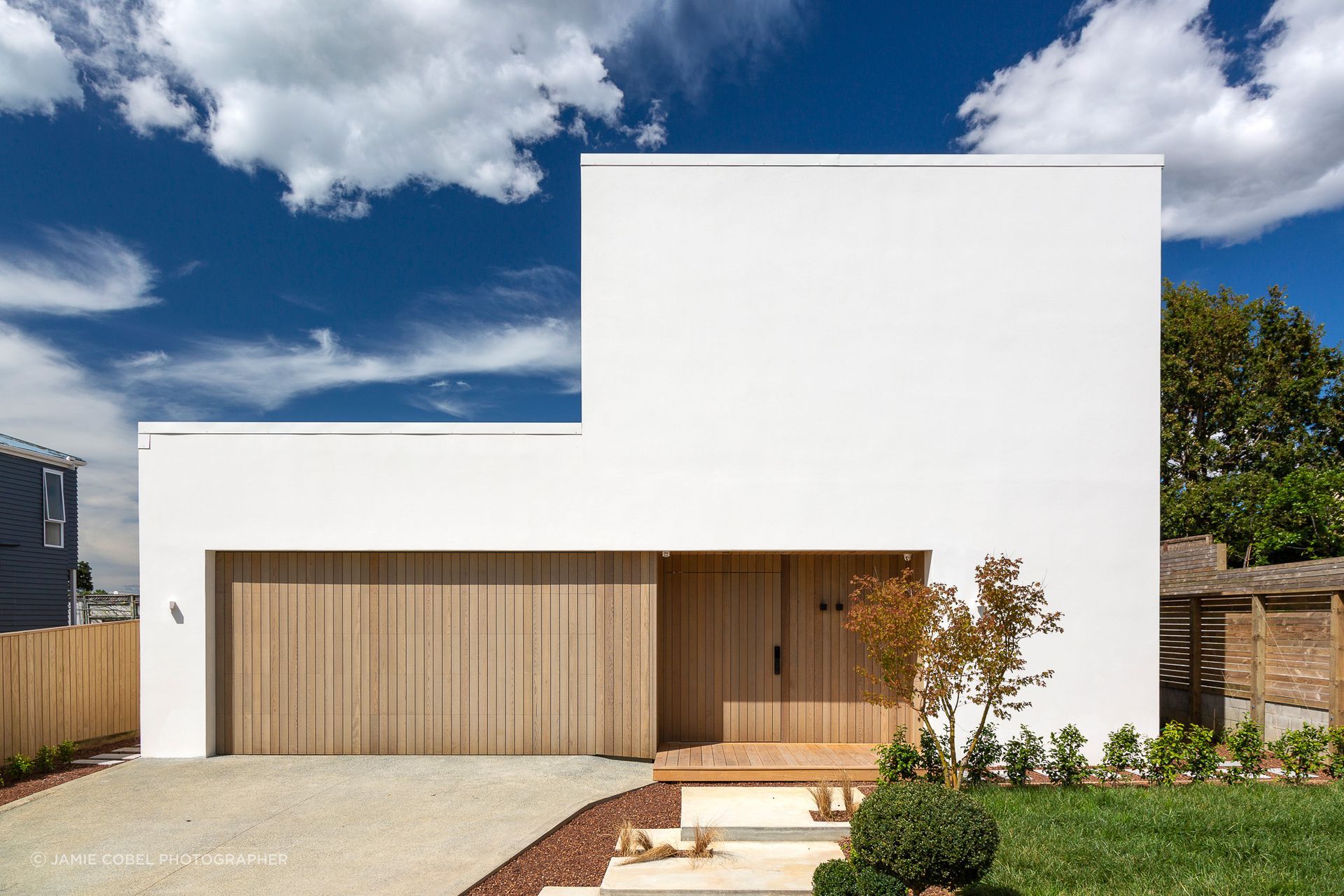
That perspective also explains why the practice has remained resilient through decades of change in the profession. Over time, Leuschke has watched the role of architects shift.
“I would say the biggest change I have seen has been with technology, the Building Code, council demands and the amount of industry knowledge you now need to have.”
Yet despite that observation, his enthusiasm for the work remains intact. He still finds interest in how houses evolve as lifestyles shift. Remote work, shared domestic responsibilities and changing family patterns are all influencing the layout of contemporary homes.
“We are seeing houses morph again,” he says. “People are living differently and that changes how spaces work, pushing design forward.”
After years in practice, it is that ongoing evolution that continues to hold Leuschke’s attention. Architecture, like the lives it contains, rarely stands still.
Building should be exciting, not exhausting. ArchiPro brings together projects, products and professionals in one place so you can move from dreaming to doing with confidence. Whether you're an architect specifying materials or a homeowner planning a renovation, ArchiPro connects you with trusted suppliers and professionals.