Livable modernism and the architecture of connection

Written by
01 June 2026
•
4 min read


“We want to design beautiful homes,” says Pozil, “but we also want to design them to be in the background of your life and not get in the way of your everyday life.”
It is a subtle distinction, but an important one. McClean Design’s houses are often dramatic in image. They occupy extraordinary sites, frame expansive views and incorporate complex plans of wellness, entertainment, and retreat.
Yet the practice’s deeper concern is how those houses are experienced from within.
How does light enter?
How does the view unfold?
How does water change the atmosphere?
Where does the boundary between inside and outside begin to disappear?
The practice draws from the lineage of California modernism, particularly its emphasis on openness, transparency, and connection to nature. Indoor-outdoor living is not treated as a stylistic device, but as one of the core principles of the work. Pocket sliding doors, continuous sightlines, layered glazing, and open thresholds allow the house to blur the distinction between interior and exterior.
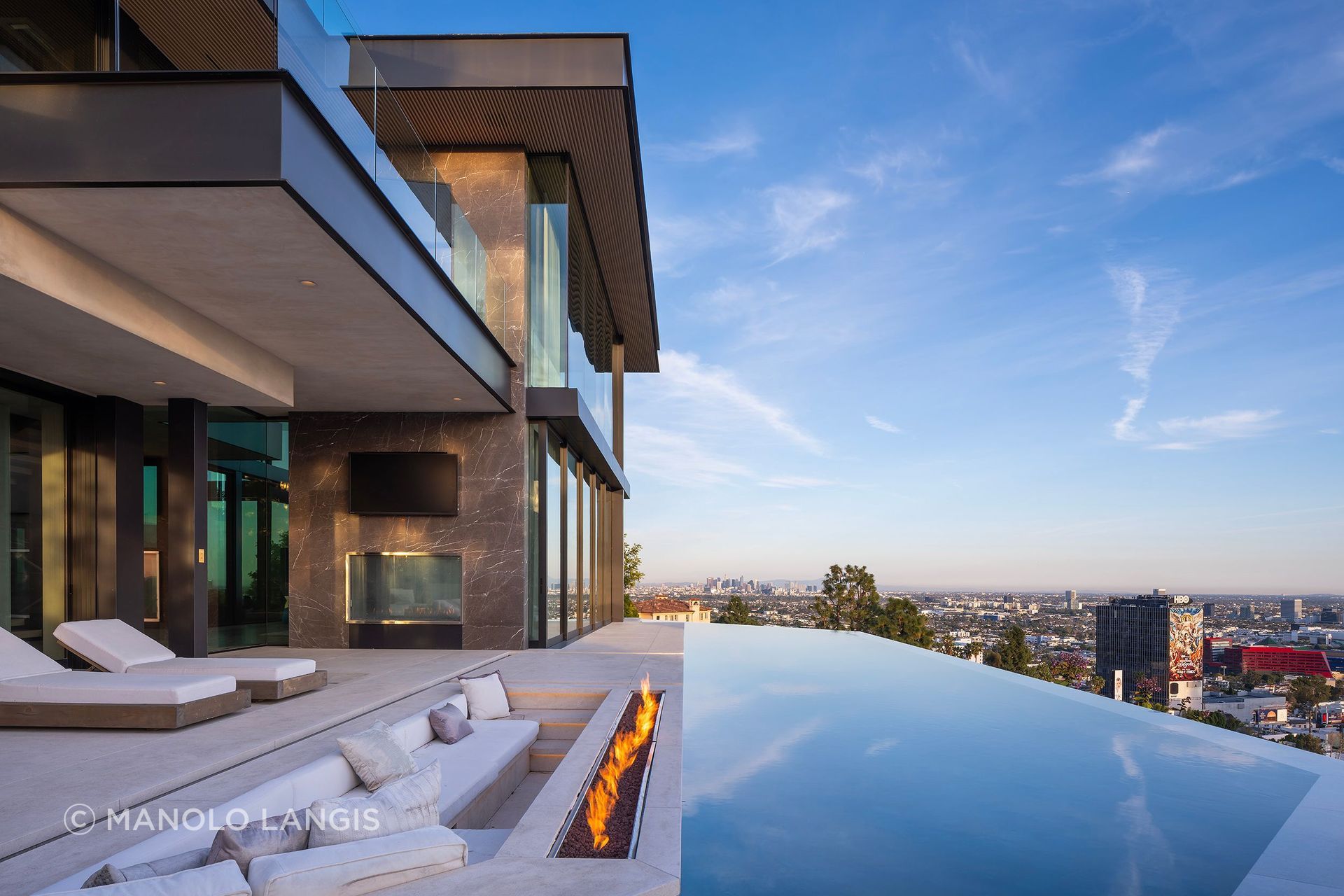
In many McClean Design homes, there are moments where it becomes difficult to identify where the room ends and the landscape begins, and that ambiguity is intentional. The architecture is designed to heighten the client’s experience of the site, whether that means city lights, hillside views, courtyards, water, gardens, or sky.

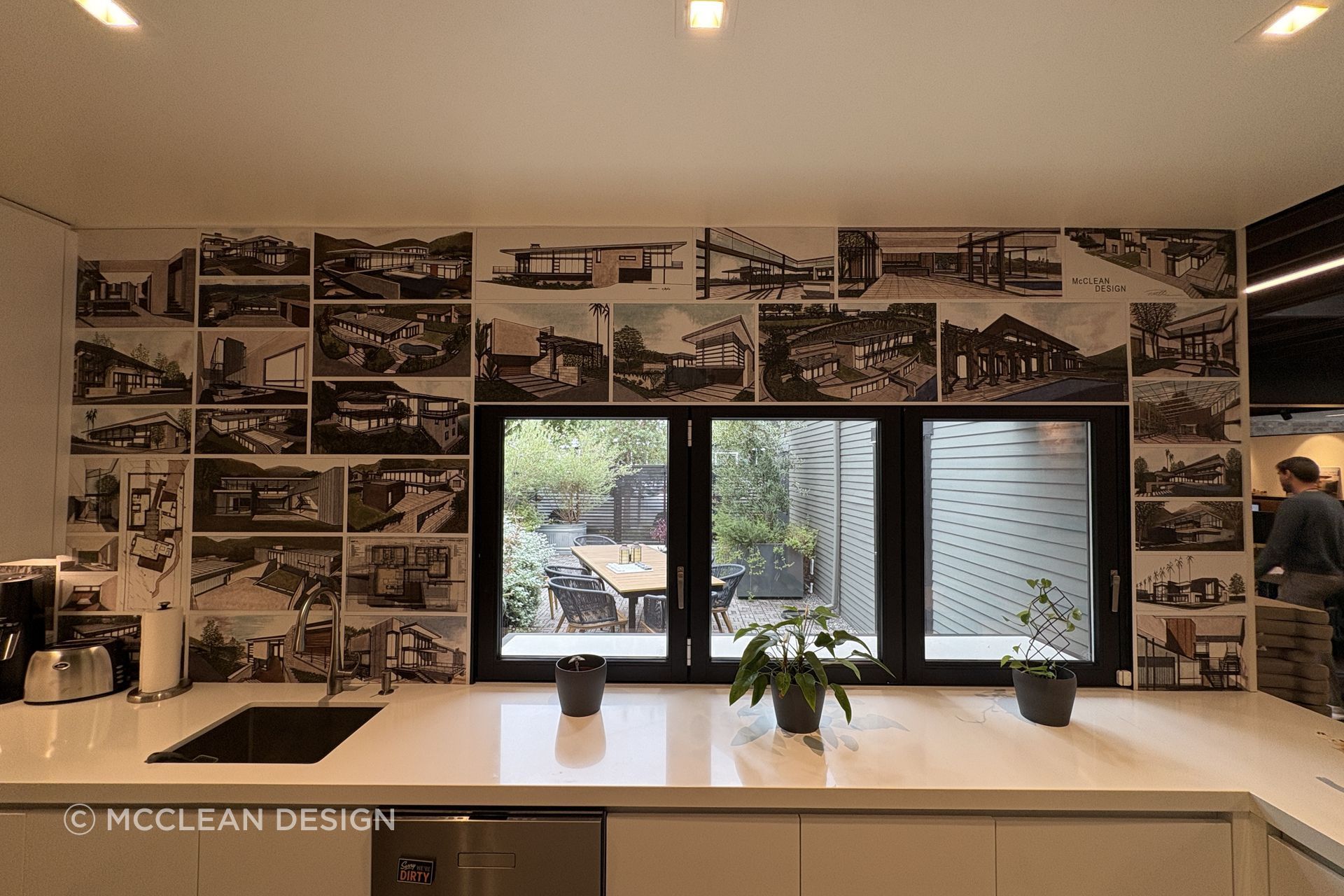
Transparency is one of the practice’s most important tools. It allows views to pass through the house, connects front and rear landscapes, and brings natural light deep into the architectural envelope. But transparency is not only visual, but it is also experiential. It allows people to feel oriented, connected, and aware of the environment around them.
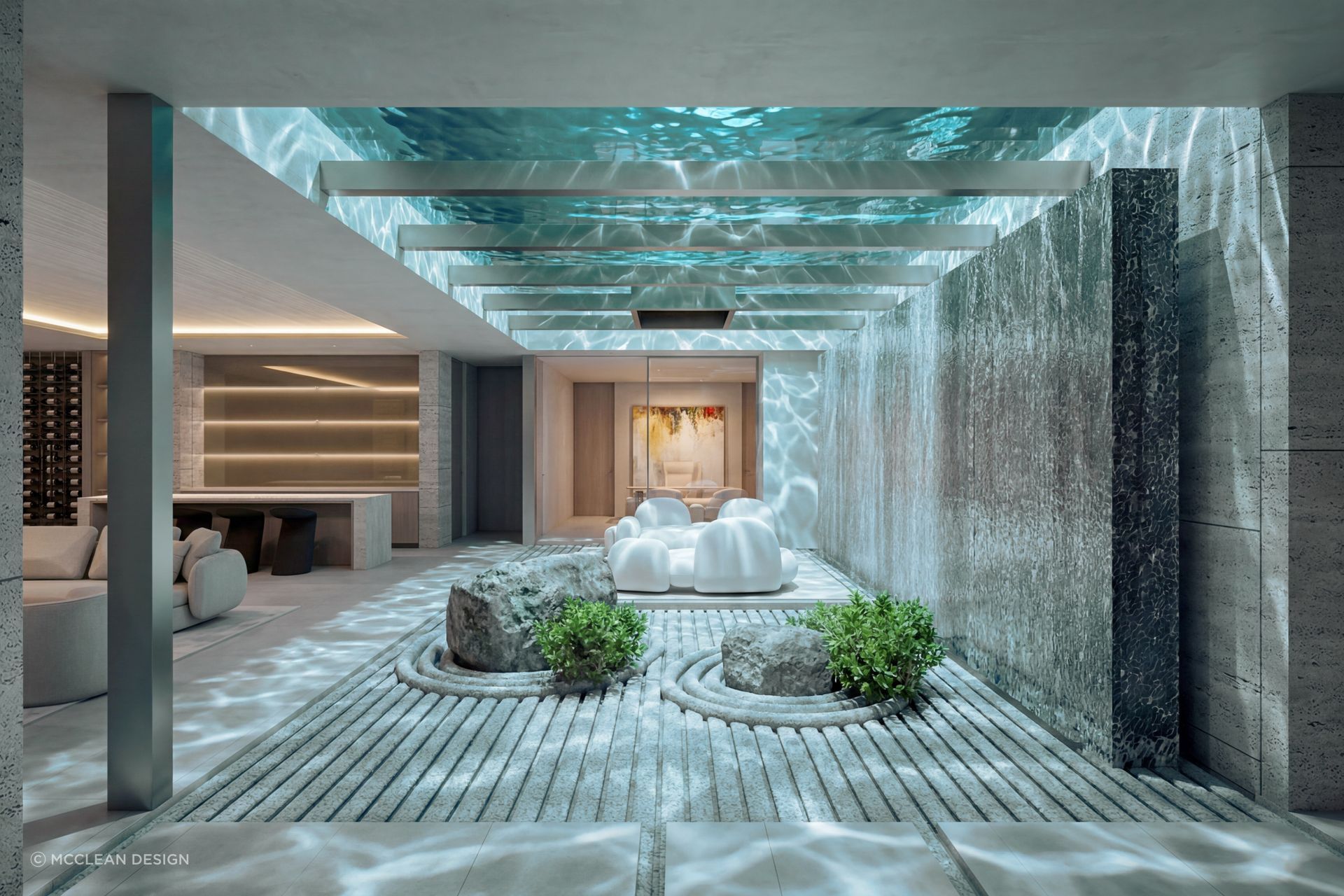
Water is another defining element. In McClean Design’s work, water is rarely just decorative. It is used for reflection, refraction, sound, and atmosphere. It can bring light into basement courtyards, create acoustic softness, animate walls and ceilings, and turn wellness into something more elemental than a list of amenities.
Pozil notes that while many clients request gyms, spas, cryotherapy, pools, and wellness suites, the firm still sees connection to nature as the primary wellness amenity. Natural light, open air, sound, views, and water can shape how a person feels in a home long before any specialized feature is introduced.
This client-centred approach also means that luxury is never defined in the same way twice. For one client, luxury may be the ability to host large groups of friends and collaborators. For another, it may be the experience of gathering an extended family in one place. For another, it may be privacy, calm, wellness, or the ability to live closely with a view. “Our definition is really just finding out how to give the client their version of luxury,” says Pozil.
Delivering this requires close collaboration from the earliest stages of a project. Most clients come to McClean Design because they already feel aligned with the firm’s portfolio, but each project still needs to be shaped around a specific person, family or way of living. Cordell 2 and Aria show that clearly.
Both are located in West Hollywood, close to one another and connected to major views. Yet one was designed for a music producer, with a plan shaped by entertainment, performance, and creative energy. The other was designed for a large family, with a more intergenerational rhythm of gathering, food, and connection. The architecture is recognizably McClean Design in both cases, but the homes are fundamentally vary because the clients are different.
Collaboration extends well beyond the client and architect. Pozil describes contemporary residential design as increasingly layered, involving builders, interior designers, landscape architects, security consultants, trainers, wellness specialists, and many others. As homes become more technically and programmatically complex, the architect’s role also expands. It becomes part designer, part mediator, and part coordinator of a much larger creative and technical team.

Over the past 25 years, the practice has also seen the industry change dramatically. Early projects could be resolved with smaller drawing sets and more informal on-site coordination. Today, houses of this scale require extensive documentation, digital modelling, RFIs, and coordination across disciplines. The process has become more complex, but it has also enabled a greater level of precision and ambition.
As ArchiPro launches in the US, McClean Design speaks directly to the value of showing not only finished architecture, but the thinking behind it. Homeowners need more than beautiful images. They need to understand the materials, decisions, consultants, and collaborators that allow a house to work at this level.
ArchiPro brings those layers together, helping people explore professional profiles, completed projects, products, and suppliers in one connected environment. Discover McClean Design on ArchiPro, browse more contemporary residential architecture or explore the products and professionals shaping the next generation of modern homes.