More than greenery: How planters are transforming commercial architecture
Written by
19 July 2026
•
4 min read

There was a time when planting was one of the final items ticked off a commercial project's specification list. Furniture was installed, finishes were complete and, only then, greenery was brought in to soften the edges. Today, that approach has been turned on its head.
As architects and interior designers increasingly embrace biophilic design, landscape integration is becoming an essential part of the architectural conversation from the earliest planning stages.
For Secret Gardens, this shift has been unfolding for years. In fact, it was the firm's own landscape architects who recognised a gap in the market long before planting became such a defining feature of commercial interiors.
"We couldn't find pots that we liked with the level of finish we were looking for," explains Rochelle Abood. "So we designed them and had them made for our own projects. People kept asking where they were from, and that's really how Hibernate Outdoors started."
Rather than designing a product to sell, the team designed a solution to a problem they were facing themselves. Today, Hibernate’s architectural planter collection is specified across residential and commercial projects throughout Australia, including large office fit-outs where hundreds of planters become an integral part of the design language. The Contemporary Matte range is crafted from lightweight fibreglass, while NoMud uses a durable polyfibre blend to achieve a more organic, textured finish.
The growing prominence of planting is perhaps most visible in workplace design. As offices become places that prioritise wellbeing alongside productivity, greenery is being used to soften interiors, improve air quality and introduce a sense of calm into environments traditionally dominated by hard materials.
"I think interior designers and architects now see pots as furniture," says Abood. "It's not an afterthought anymore. It's very much at the forefront of the design process."
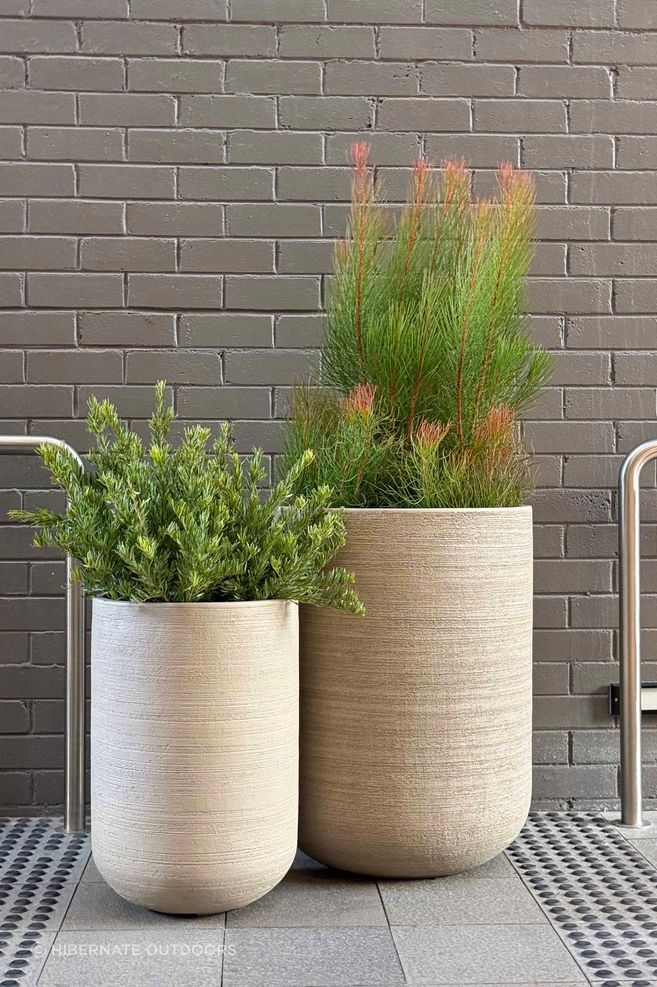
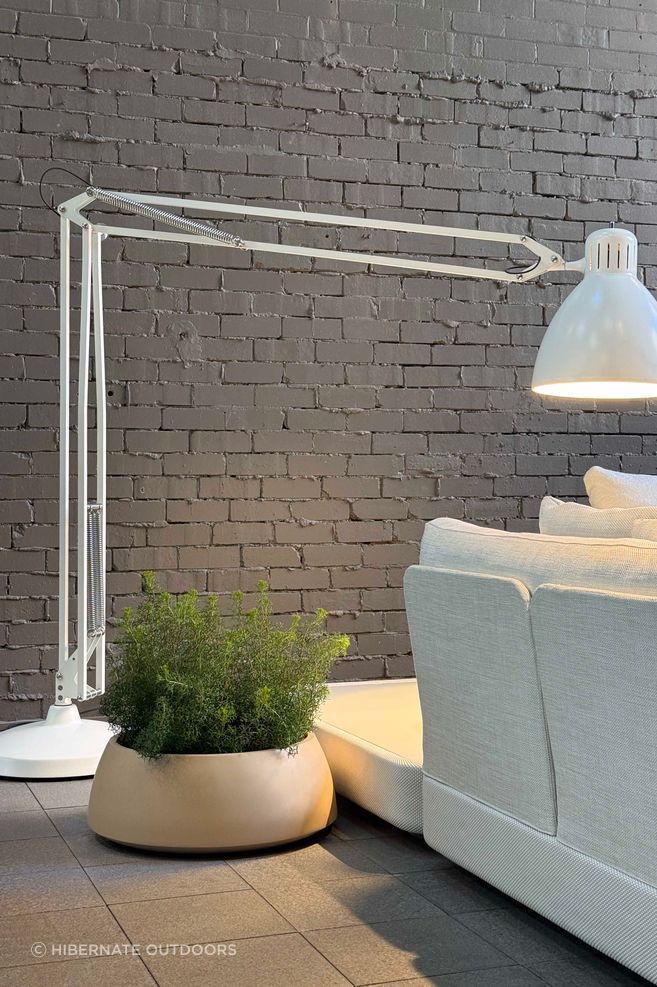
That shift has changed when products such as planters are specified. Rather than selecting them at the end of a project, designers are incorporating them into floor plans alongside furniture layouts, ensuring planting becomes part of the overall spatial composition.
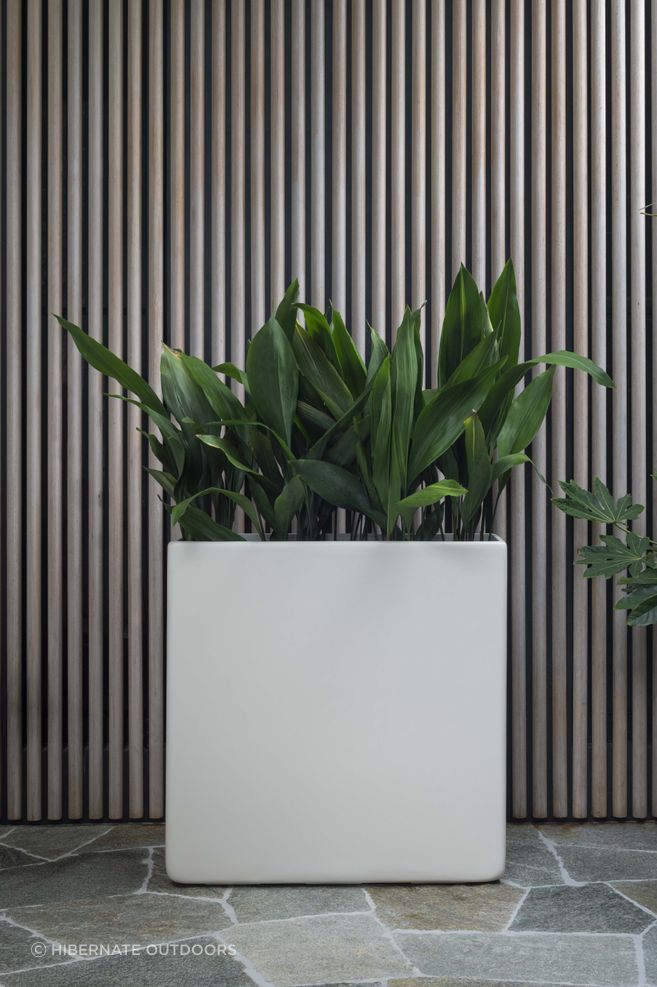
The role these elements play extends well beyond aesthetics. Clusters of organic planters can create moments of softness within expansive open-plan offices, while larger rectangular forms define thresholds, separate zones or establish outdoor dining areas without the permanence of built walls.
"We're seeing a lot of clusters with round, organic shapes," says Abood. "We also have rectangular planters that work really well as space dividers and they're used a lot in restaurants and cafés to define outdoor dining spaces."
Of course, specifying planting in commercial environments also brings practical considerations. Weight, durability and ease of installation are all important, particularly in multi-storey buildings and balconies.
That practicality is central to Hibernate’s material approach. The Contemporary Matte range uses lightweight fibreglass, while NoMud is crafted from a durable polyfibre blend; both are designed to offer strength, easier installation and reduced weight compared with heavier traditional planters.
“‘If you were using ceramic on a balcony, you would often need engineers involved because of the weight," says Abood. "Because our planters are fibreglass, they're lightweight and strong - even our biggest pot, I could lift the weight of it myself. It's just so large that having two people makes it quicker and safer to move.”
While lightweight materials once carried perceptions of lower quality, advances in manufacturing have changed expectations. Hibernate's Contemporary Matte and NoMud Textured collections combine tactile finishes with restrained, architectural forms and a palette of whites, creams, soft greys and stone tones that complement rather than compete with surrounding architecture.
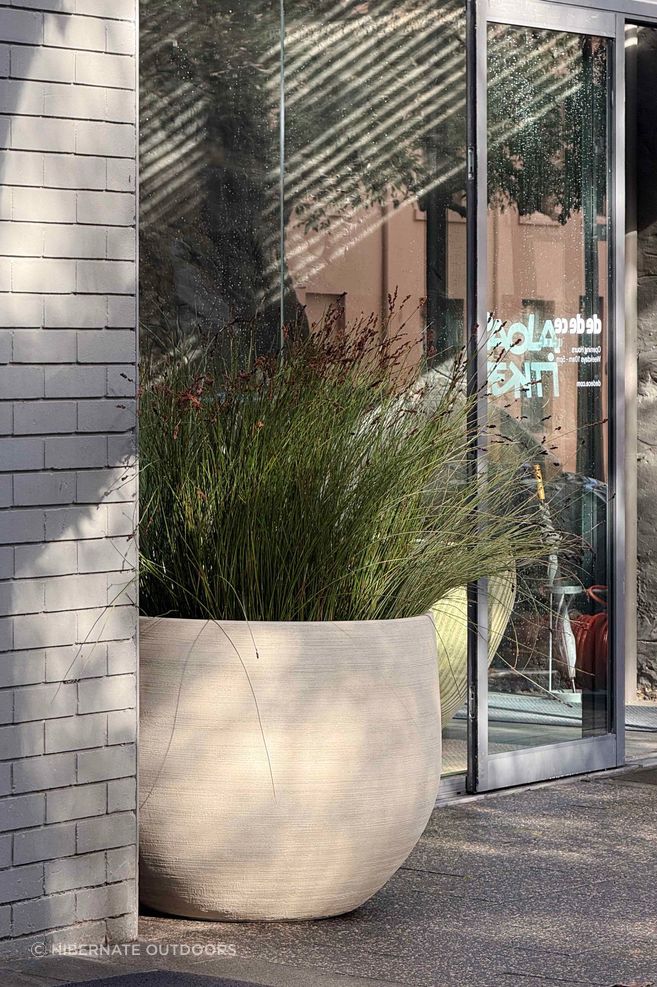

The newest Nomud Textured collection has proven particularly popular in commercial settings, introducing another layer of material richness into contemporary interiors.
"We're seeing it go into office spaces because texture helps soften environments that can sometimes feel a bit sterile," Abood says.
The planters are now available in commercial furniture retailers too, making them even easier to specify.
The team continues to dream up more design solutions to the projects it serves, with oversized commercial planters currently in development to accommodate mature trees and larger-scale landscape schemes.

It's a fitting progression for a collection born from real-world design challenges. Created by landscape architects for contemporary landscapes, its success reflects a broader shift within architecture itself. As buildings increasingly seek to reconnect people with nature, landscape integration is no longer viewed as an embellishment, but as a fundamental part of creating places where people genuinely want to spend time.
Building and renovating should be exciting, not exhausting. ArchiPro brings together the country's best products, professionals and projects in one place, making it easier for architects, designers and homeowners to discover considered solutions that elevate every aspect of the built environment.