A contemporary retreat designed around movement and stillness
When the clients first approached Feldman Architecture about designing their new home in Bend, they were standing at the edge of a major life shift.
Their daughter was preparing to leave for architecture school. They were empty nesters for the first time. After years of living in Portland, the couple found themselves drawn toward something quieter and more connected to the outdoors. It was their daughter who first introduced them to Feldman Architecture after admiring the studio’s work herself.
Architect Humbeen Geo says the clients arrived with a very clear vision for this next chapter of life. They wanted to leave the city behind without sacrificing the active routines and connection to nature that had become increasingly important to them.
“They specifically wanted something more modern than what they were seeing in the area,” says Geo.
The site they found sat just ten minutes from downtown Bend, close enough to restaurants and everyday conveniences, yet buffered almost entirely from the noise and activity of the city. The rear half of the property opened toward undeveloped land thick with trees, creating a remarkable sense of calm and privacy despite its proximity to town.
“There’s a really big buffer between the site and the city,” says Geo. “The back half of the lot is unincorporated and undeveloped, so it feels incredibly serene.”
That balance between openness and seclusion became one of the defining drivers of the architecture itself. The home was carefully positioned to shield neighboring properties while opening toward a narrow corridor of filtered views stretching through the trees beyond.
Geo explains that the orientation of the building became critical to establishing both privacy and the experience of moving through the home. The architects worked closely with the slope of the site, shaping the plan almost as a diagram of the clients’ daily routines and circulation patterns.
“There’s a very clear diagram of the plan,” he explains. “The separation of the spaces maps out the circulation and the pathways someone experiences throughout the day.”
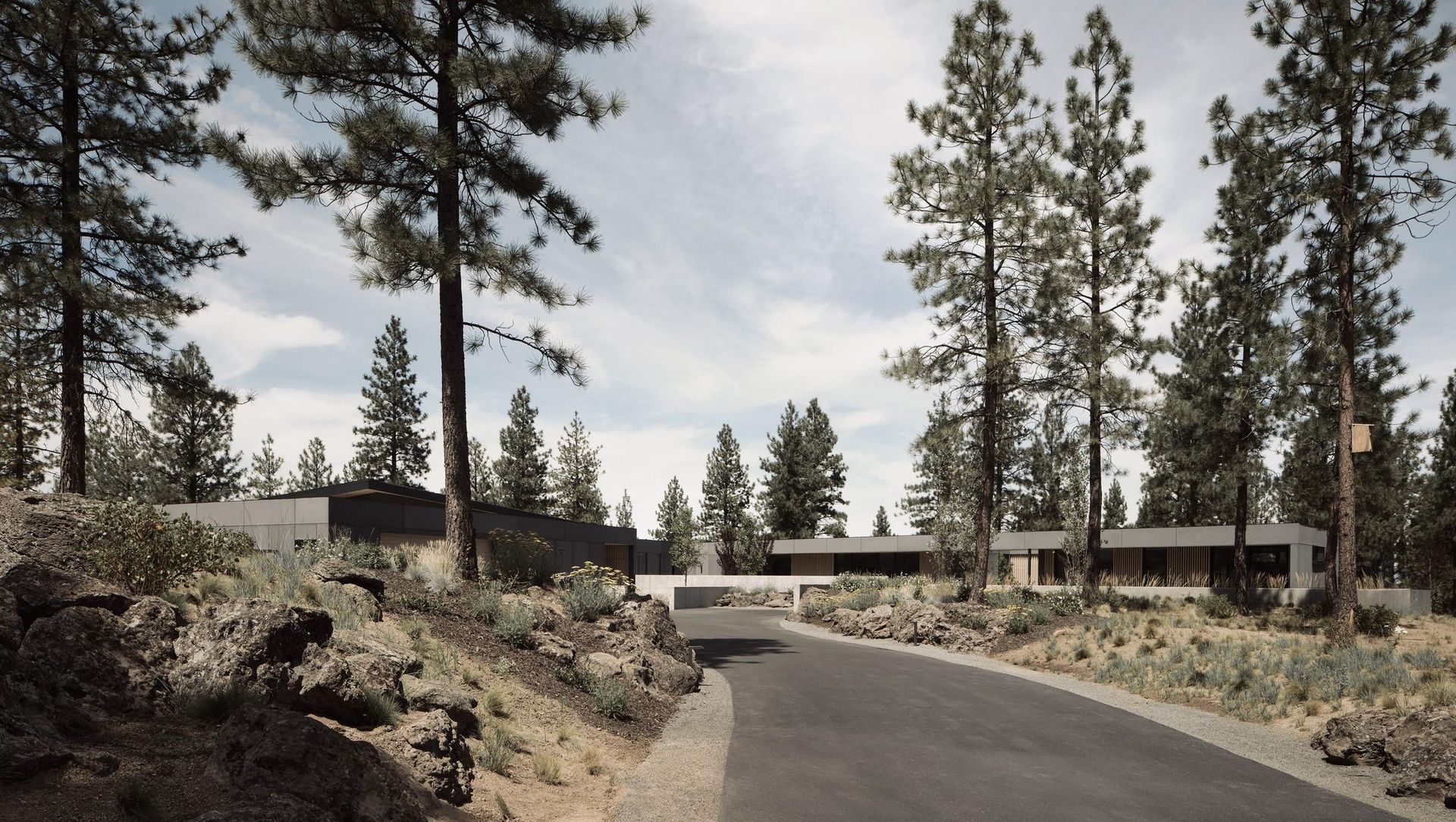
Arrival unfolds deliberately. Visitors move slowly along the driveway through planting and carefully framed glimpses of the house before reaching a recessed entry that remains partially concealed from view.
“We wanted the entry to feel hidden a little bit,” says Geo. “Then when you open the front door, that’s when the space expands.”
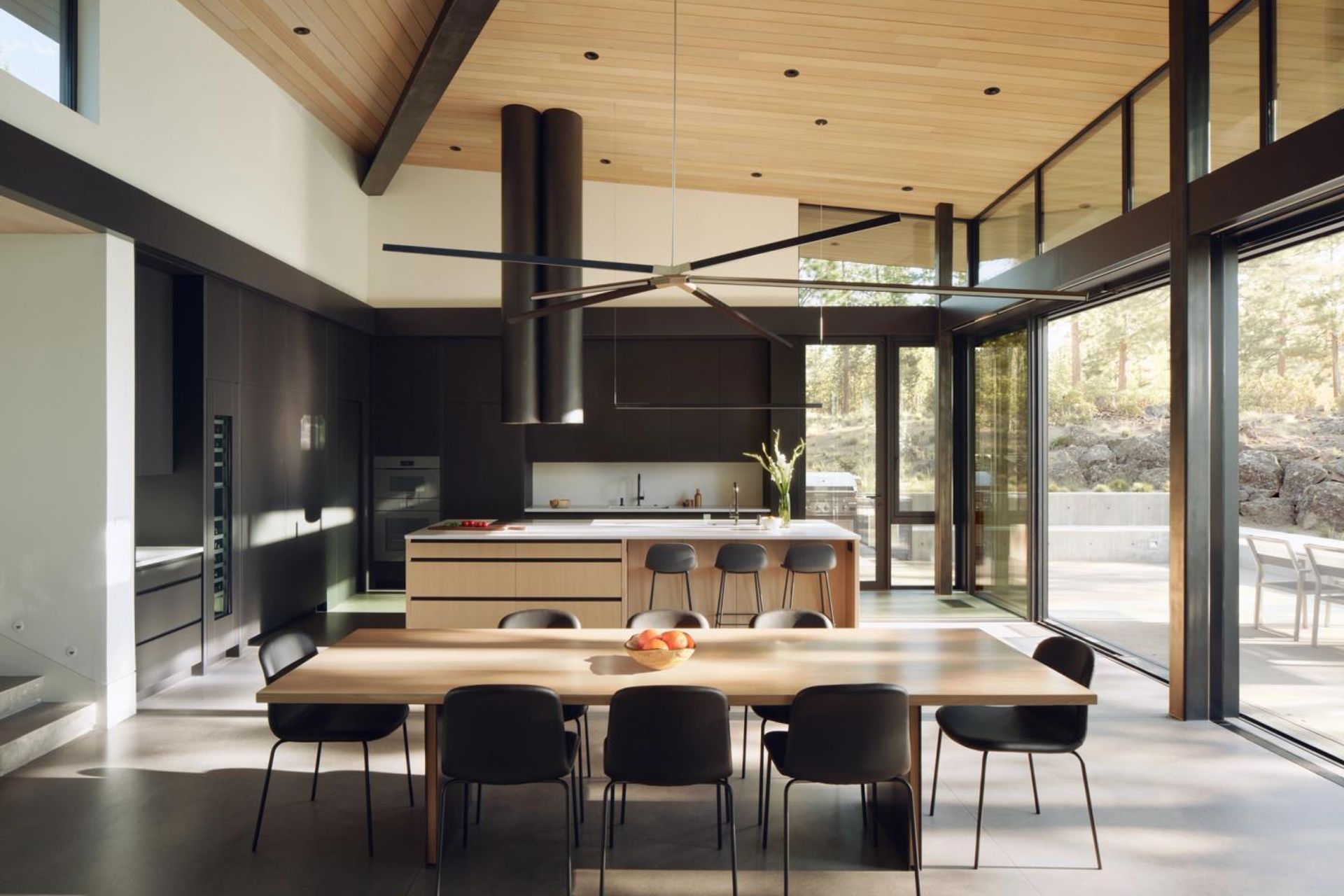
Inside, the ceiling lifts dramatically upward across the great room while the landscape beyond suddenly reveals itself. The effect is both restrained and cinematic, allowing the architecture to unfold gradually rather than all at once.
The house itself is organized into three distinct zones. The central public wing contains the kitchen, dining and living spaces connected directly to the outdoor patios and pool courtyard. A bridge extends toward the primary suite, separating the owners’ private daily routines from the entertaining spaces, while a dedicated guest wing can be closed off almost entirely when not in use.
That same logic shaped the home mechanically as well, with separate heating and cooling systems allowing portions of the house to operate independently depending on occupancy.
But perhaps the most unusual element within the brief was the full lap pool. Both clients lead active lives, and swimming forms part of the husband’s daily routine. Alongside the pool, the architects incorporated a sauna and gym that support the clients’ active lifestyle year-round.
That active lifestyle also informed the relationship between the interior and exterior architecture. Large sliding timber screens line the western façade, filtering glare and sunlight while maintaining a strong visual connection to the landscape beyond. Rather than sealing the house off completely, the screens create a softer threshold between indoor and outdoor living.
Materially, the house balances industrial sharpness with warmth and restraint. Fire resilience played a significant role in the exterior design, leading the architects toward fiber cement cladding as the dominant façade material. Horizontal lines run continuously across the architecture, reinforced through the panelized cladding system and carefully aligned window openings.
Inside, the clients’ preference for a more industrial palette shaped the interiors from the outset. Concrete floors stretch through much of the home, while an oversized exposed ridge beam cuts diagonally across the great room overhead. Dark cabinetry, exposed metals and black detailing reinforce the house’s restrained architectural language.
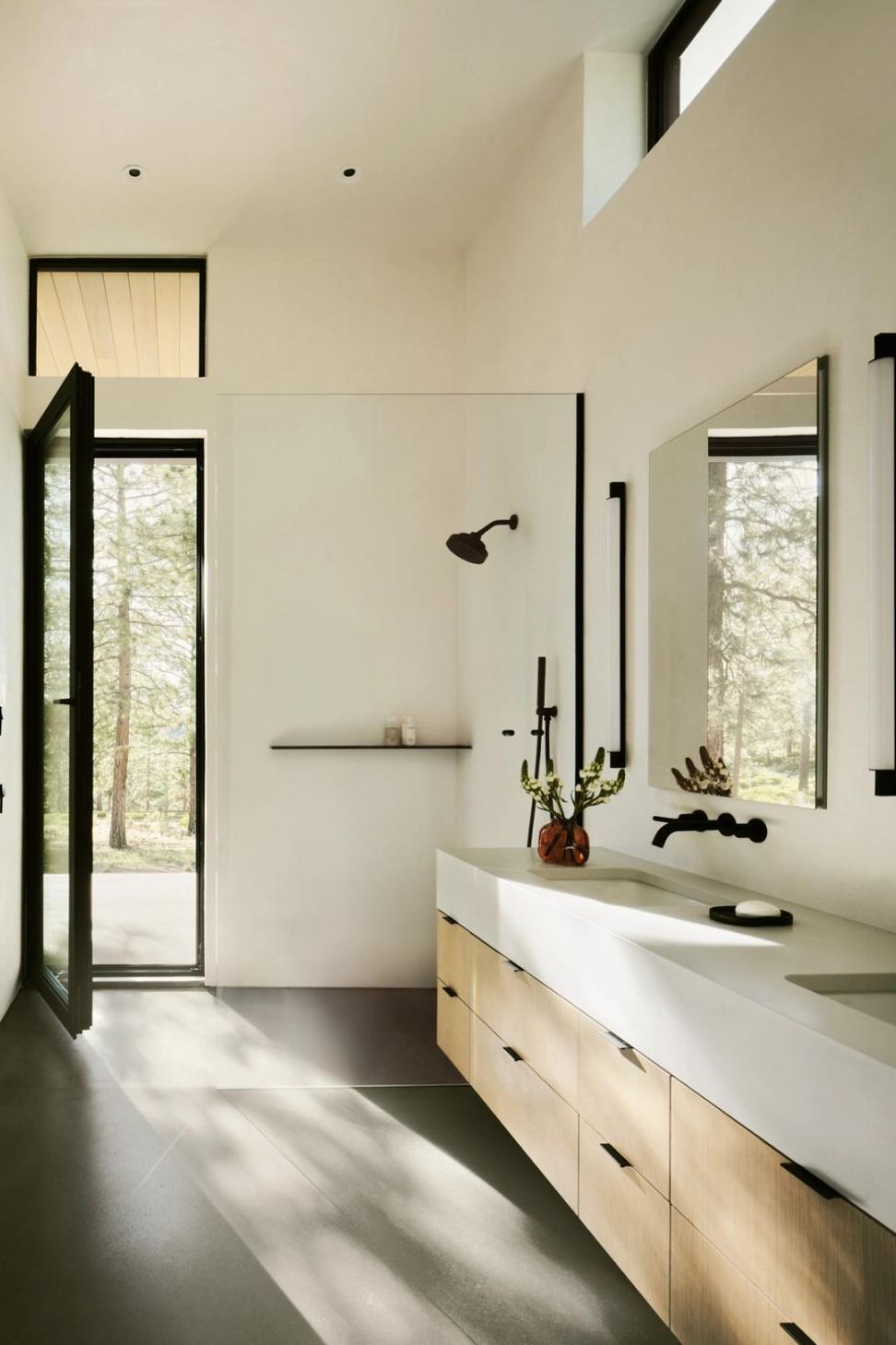
Yet without balance, those materials could easily have felt too severe against Bend’s alpine climate. To soften the palette, the architects introduced thermally modified hemlock ceilings and moments of timber warmth throughout the interiors.
“It’s very easy for that palette to become too cold,” says Geo. “So we intentionally introduced wood ceilings and moments of warmth throughout the house.”
The result is a home that feels simultaneously grounded and calm. Concrete and metal establish permanence, while timber and filtered natural light soften the atmosphere throughout the day.
For the clients, the success of the project now lies not in any one singular architectural gesture, but in how those countless smaller decisions shape everyday life. Geo says hearing how naturally the owners now inhabit the home has been one of the most rewarding parts of the process.
“It’s always really gratifying hearing that all of those design decisions add up to special moments in their everyday life,” he says.
And perhaps that is what makes the project feel so successful. The architecture does not compete with the landscape or overwhelm it. Instead, it creates a carefully measured framework for a slower, more intentional way of living within it.
As more homeowners seek spaces that respond thoughtfully to both landscape and lifestyle, projects like this reflect a growing emphasis on homes that are deeply personal, highly functional and built to evolve over time. Platforms such as ArchiPro continue to play an important role in connecting architects, clients and industry professionals, bringing together the projects, products and expertise that help turn ambitious residential visions into reality.